14 April 2026
Weed Control MelbourneHomemade Weed Killers: Natural Methods, Risks & Results
Hardscape weeds are a rising problem in countries with wild climates like Australia. Homemade weed-killers (vinegar, salt, baking soda, boiling water) kill by contact only; they burn or dehydrate plant tissue, not roots. They work quickly on young annual weeds (high short-term effect) but generally have poor long-term control (perennial roots survive). Being non-selective, these treatments will damage any green plant they touch. In this article, we’ll explore the major advantages, disadvantages, potential soil harm, and legal liabilities that can ensue with the use of homemade chemicals.
Mechanisms & Effectiveness of DIY Weed Killers
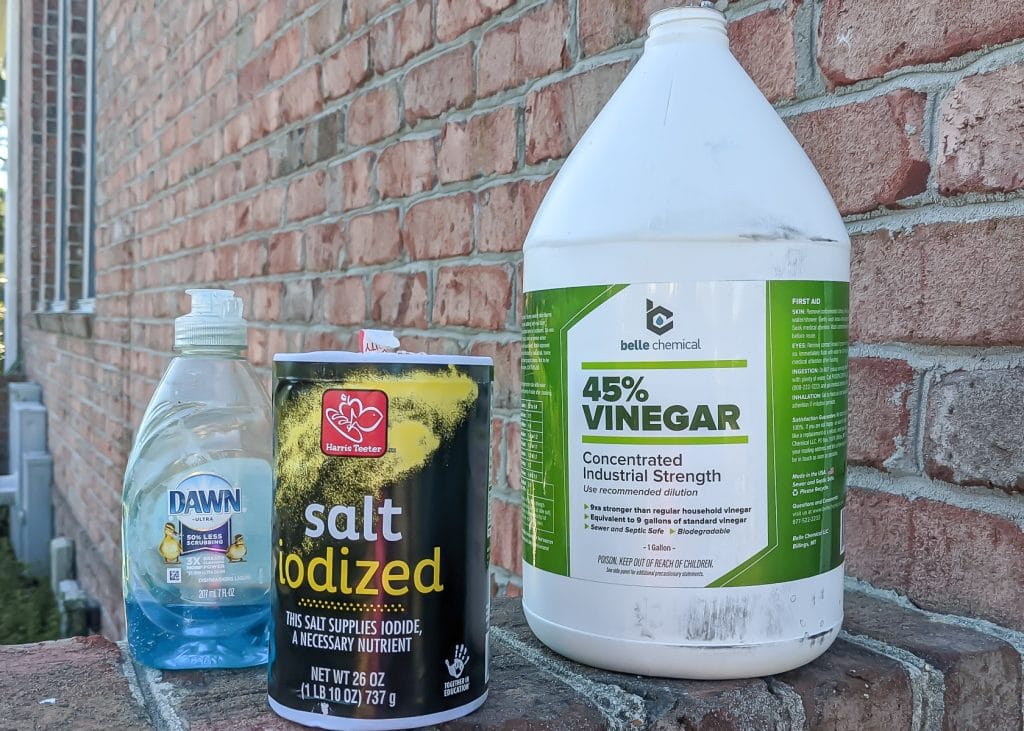
Vinegar (acetic acid): Household vinegar (5%) only burns very small seedlings, but horticultural-strength (10–20%) acetic acid rapidly dehydrates leaf cells. The acid strips off protective wax on leaves, causing visible “burn” in hours. This contact-only action means it kills only plant tissue it touches; roots remain alive, so most weeds regrow. It works best in hot sun on young annuals; mature or deep-rooted weeds survive and require retreatment.
Salt (sodium chloride): Salt draws water out of plant cells, quickly wilting foliage. It is highly potent and long-lasting: salts do not break down easily, so one heavy application can leave soil sterile (no plants grow). The salts also dissolve and leach through soil, potentially harming nearby plants. Thus salt kills strongly where applied but often at the cost of long-term soil health (see Soil section).
Baking Soda (sodium bicarbonate): Chemically a salt, baking soda acts similarly by raising sodium levels. It has lower immediate burn effect than vinegar or table salt, so it is generally much slower or ineffective on robust weeds. Like salt, it can increase soil salinity if overused. (Research on baking soda is sparse, but its sodium content means similar cautions as salt.)
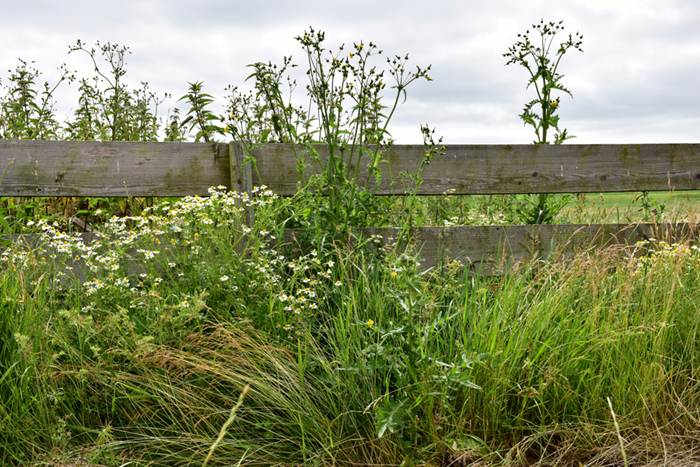
Boiling water: Pouring boiling water scalds and kills above-ground tissue immediately. It requires no chemicals. It works well on any tender foliage (young weeds, moss) and in hardscape cracks, but it has no lasting residual effect – roots and rhizomes deep in soil remain unharmed. Repeated applications are needed for perennials. Boiling water poses serious personal risk (burns) and can also harm adjacent soil organisms. Land-for-Wildlife notes that heat treatments (boiling, flame) kill by destroying plant cells and work “most effectively on young annual weeds”, with the key advantage “no chemicals” but the major drawback of being “dangerous to people and property” and “not selective”.
Recipes and Usage Notes
Common recipes include vinegar-based sprays, salt solutions, and boiling water. For example, a simple mix is 1 L white vinegar + 2–3 tablespoons salt + a teaspoon of dish soap (soap helps it stick) – applied directly to foliage on a sunny day. Some sources advise using horticultural (20%) vinegar for better effect. Baking soda sprays (e.g. 4 tablespoons per litre water) are sometimes recommended, though they mainly help on tiny weeds or as a mild foliar burn. Boiling water is simply poured on weed clusters or into cracks. All treatments should be done on still, dry days to prevent drift. Do not pre-mix in metal containers (acetic acid is corrosive to metal). Always protect non-target plants (use shields or apply with a brush).
Pros and Cons
Pros: These DIY methods use inexpensive, readily-available ingredients and no synthetic herbicides. They provide immediate visual kill of top growth. There is no lingering chemical residue (e.g. pelargonic acid and vinegar leave “no meaningful soil residual”). They are easy to combine with organic gardening (no registration needed). For small patches or hardscapes, they can be an effective short-term burn-down tool.
Cons: All these methods are non-selective – they harm any green tissue touched. They typically need multiple applications (they burn foliage but not roots). Some ingredients pose user hazards: concentrated vinegar is corrosive (can cause chemical burns), and carrying boiling water outdoors is inherently dangerous. Salt and baking soda can damage soil: even a single heavy dose of salt can sterilise a spot for months. Energy cost of boiling water (fuel for kettle) can be non-trivial. Overall labour cost is high (spraying and repeat treatments are time-consuming).
Safety tip: Always wear gloves, eye protection and avoid inhaling fumes when handling strong vinegar, salt solutions or hot water. If splashed, flush skin/eyes with running water for 20+ minutes. Cover any skin contact with cool water immediately and seek medical attention for severe burns.
Environmental & Soil Impact
Acidity (vinegar): Vinegar lowers pH on contact, but acid effects in soil are usually short-lived. Repeated vinegar applications may temporarily suppress soil microbes under the spray zone, but beneficial organisms generally recover. Because household vinegar is weak, the overall environmental impact is modest if used sparingly.
Salinity (salt/baking soda): Salt is a cumulative toxin in soil. Illinois Extension warns that salt-based weedkillers “destroy the soil structure” and are mobile – leaching to surrounding soil. This can kill beneficial microbes and plants beyond the target area. Borax (not covered above) similarly accumulates and leaves barren spots. Baking soda acts similarly (its sodium can accumulate). Thus, use salt mixtures only on hard surfaces or gravel where no desirable plants exist.
Heat (boiling water): No chemicals means no residues, but high temperatures will kill non-target organisms too (earthworms, fungi) in the immediate splash zone. Repeated use will essentially sterilise the soil like solarization.
Best-Practice Application (Residential Gardens)
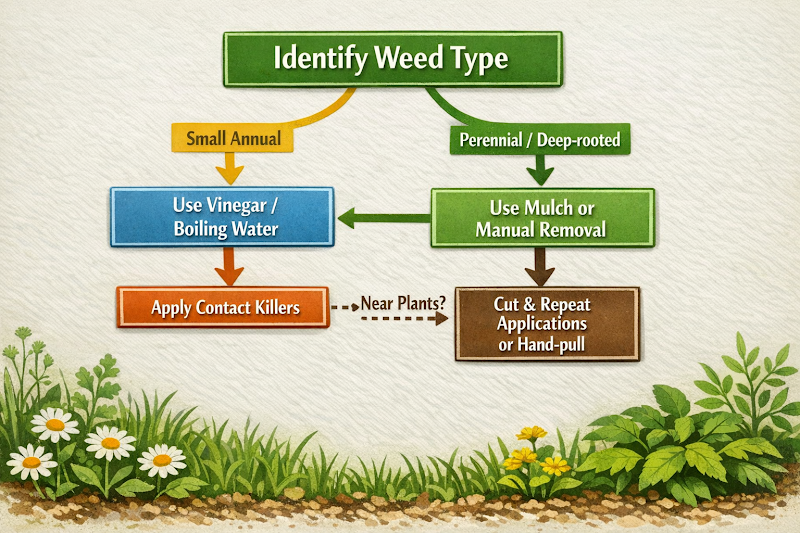
- Target weeds small: Apply on young seedlings rather than mature weeds.
Sunny, calm days: Effectiveness is maximized in hot, dry weather; avoid windy or damp conditions.
Avoid drift: Aim sprays directly onto leaves; shields or cardboard can protect nearby plants.
Post-treat: Remove dead foliage or reapply to regrowth. Always wash equipment (and skin) after use.
Legal liabilities & Disability Claims
While using homemade remedies is generally low-risk, accidents or health effects from exposure can have serious consequences. For instance, if someone sustained a lasting injury (like a severe burn or chemical illness) and can’t return to work, this may qualify as a disability. Notably, Canadian courts recognise chemical sensitivity as a disability: “Both the Ontario and Canadian Human Rights Commissions have accepted [MCS] is a ‘disability’”. Workers disabled by toxic exposures often need long-term disability (LTD) benefits. Disability lawyers note that conditions triggered by environmental toxins may entitle victims to LTD insurance payouts or compensation. In such cases (for example, if exposure in gardening leads to chronic illness), consulting a long term disability lawyer in Toronto can be a prudent step to secure rightful benefits and navigate complex claims.
When DIY Isn’t Enough
Homemade weed killers can be effective for small, surface-level problems — especially between pavers or in hard-to-reach cracks. However, if weeds keep coming back, the issue is usually deeper than what these methods can fix.
Persistent weeds are often caused by underlying problems like poor soil preparation, drainage issues, or improper landscaping design. Without addressing these, even the strongest treatments will only provide temporary results.
At Melbourne Greenworks, we focus on long-term weed control solutions — not just surface fixes. From proper site preparation to professional turf installation and hardscaping, we help eliminate the conditions that allow weeds to grow in the first place.
If you're dealing with recurring weeds or planning to upgrade your outdoor space, explore our weed control services in Melbourne to see how we can help create a cleaner, low-maintenance garden.
Final Thoughts
DIY weed killers have their place — but they’re best used as a short-term solution. For lasting results, combining proper landscaping techniques with the right materials and design approach is key.
Taking a proactive approach now can save you time, effort, and ongoing maintenance in the long run.